
BOB DYLAN
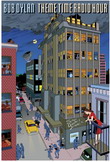
The Basement Tapes
This article is courtesy of tricia.j and expectingrain.com:
Turn On the _base_ment Lights
Rock writer/Dylan freak Sid Griffin attempts to crack one of music's great mysteries.
By Justin F. Farrar
Published: October 24, 2007
Music fans have been stuffed with enough Bob Dylan product to keep 'em fat through the next century. The music industry will pump out anything it can on the guy, no matter how repetitive or gratuitous. Dylan's longtime label, Columbia, just dropped yet another anthology of previously released material: the triple-disc set Dylan. And on October 30, Sony will release the Other Side of the Mirror: Live at the Newport Folk Festival DVD. It's far more interesting than Dylan, but still, a lot of this footage already appears in numerous formats.
But there are always exceptions, and this time around, it's Sid Griffin's book, Million Dollar Bash: Bob Dylan, the Band, and the _base_ment Tapes.
The _base_ment Tapes album might be rock's greatest mystery. In July of 1966, at the height of his popularity, Dylan crashed his motorcycle and suddenly dropped out of the spotlight amid a hurricane of rumors about nervous breakdowns, drug addiction, and even death.
Over the next year, he called Woodstock, New York, home and recorded more than 100 songs with his backing band, the Hawks (eventually rechristened the Band), in the _base_ment/garage of their nearby home, "Big Pink." But beyond a 24-track double LP in 1975 — a chunk of which isn't even true _base_ment Tape material — the recordings have only been available as crappy-sounding bootlegs. And that's all anybody really knew — until now.
Griffin, a former member of country rockers the Long Ryders, is the first writer to shed serious light on this shadowy period in Dylan's career. Moreover, he unloads a totally refreshing perspective on the music, making novel connections to the Byrds, Velvet Underground, alt-country, Americana, and modern indie rock. And he does it all without a sliver of access to the man himself.
Scene recently phoned Griffin at his London home and found a man totally obsessed and exploding with Dylan knowledge.
Unlike Greil Marcus' Invisible Republic: Bob Dylan's _base_ment Tapes, which only adds more mythology to the story, Million Dollar Bash reads like a detective story that methodically attempts to solve the mystery behind this music.
Marcus is a great writer, but he gets off the subject of the _base_ment Tapes to deliver sociological sides and state-of-the-union reports of the America of the 1860s and '40s. I didn't do that. I mean, what were these guys doing in Woodstock? It's a weird story. In 1966 Dylan is chasing the Beatles commercially and catching up. He is going to play Shea Stadium. But the motorcycle accident gets in the way, and he cancels the tour, an ABC television special, and his novella Tarantula. He also cancels all [previously scheduled] recording commitments. Yet 1967 is the year Dylan spends the most time recording and writing the greatest number of quality songs. Off the top of my head: "This Wheel's on Fire," "You Ain't Going Nowhere," "I Shall Be Released," "Lo and Behold," "Tears of Rage," plus "All Along the Watchtower" on John Wesley Harding. And none of this stuff, except "Watchtower," comes out at the time. We simply don't have a story of a pop-culture figure that's similar.
Why do you think Dylan recorded this music the way he did?
I obviously don't know the real answer. No one knows the official story, but I kind of pieced it together. Here's my speculation: Dylan is up in Woodstock, but he has this wonderful band on retainer, who are doing bugger all in a New York hotel — partying on Bob Dylan's tab. So it's [manager] Albert Grossman saying to Dylan, "The money is going to dry up. We canceled our tours and an ABC special. Bob, do something." Grossman's twin plan is to release a greatest-hits package and get this band up to Woodstock to fire Dylan up. If Grossman takes Bob to a New York studio, he might scare the horses, so to speak. So he'll arrange something informally. There's no clock, and Dylan is allowed to find a direction in comfort. And they just stumbled into this. The reason why I think this is, the initial _base_ment Tapes [recorded in spring of 1967] are just covers and songs made up on the spot. They don't get serious until we get into summer, and they don't get real serious until September.
A lot of rock critics _frame_ The _base_ment Tapes as the great oddity in Dylan's discography, but you believe it's his greatest achievement of the '60s.
Most baby boomers think the great Dylan hat-trick is Bringing It All Back Home, Highway 61 Revisited, and Blonde on Blonde. But for me its Blonde on Blonde, The _base_ment Tapes, and John Wesley Harding. Joe Boyd, producer for Fairport Convention, believes Dylan would've never gotten away from all those fanatics on his roof who thought he was God, had he made a proper album of these tapes. It seems as if this whole period was Dylan's reaction to all the intense media attention. It was absolutely out of control by mid-'66. He now had a family and wanted some peace. So he dropped out.
It's interesting how you argue that Dylan and the Band's informal home-recording process, as if it's just a bunch of friends jamming, is a major influence on not just modern rock, but indie music as well.
I think the lo-fi quality sound of all the bootlegs out there has inspired the indie approach. And, of course, now we have U2, Daniel Lanois, and his crowd recording in his house. Neil Young records things in a barn on his ranch. These folks are all inspired by Dylan and the Band. The Beatles too, for their Get Back sessions [in 1969].
Ironically, the original master tapes sound much better than the bootlegs and the 1975 LP, right?
People who have heard the very original tapes — some of Neil Young's crowd — say Garth [Hudson, keyboardist for the Band] did a wonderful job of engineering. It's not the primitive sound that all of us have heard.
Any chance of an officially expanded release one of these days?
Well, Dylan didn't make himself available for my book, but I know for a fact that Dylan knows of it. I've been lobbying for an expanded version of The _base_ment Tapes. I'm hoping one day they'll go for it in Dylan's Bootleg Series. You could easily do a three-CD remastered collection.
http://clevescene.com/2007-10-24/music/turn-on-the-_base_ment-lights/
Turn On the _base_ment Lights
Rock writer/Dylan freak Sid Griffin attempts to crack one of music's great mysteries.
By Justin F. Farrar
Published: October 24, 2007
Music fans have been stuffed with enough Bob Dylan product to keep 'em fat through the next century. The music industry will pump out anything it can on the guy, no matter how repetitive or gratuitous. Dylan's longtime label, Columbia, just dropped yet another anthology of previously released material: the triple-disc set Dylan. And on October 30, Sony will release the Other Side of the Mirror: Live at the Newport Folk Festival DVD. It's far more interesting than Dylan, but still, a lot of this footage already appears in numerous formats.
But there are always exceptions, and this time around, it's Sid Griffin's book, Million Dollar Bash: Bob Dylan, the Band, and the _base_ment Tapes.
The _base_ment Tapes album might be rock's greatest mystery. In July of 1966, at the height of his popularity, Dylan crashed his motorcycle and suddenly dropped out of the spotlight amid a hurricane of rumors about nervous breakdowns, drug addiction, and even death.
Over the next year, he called Woodstock, New York, home and recorded more than 100 songs with his backing band, the Hawks (eventually rechristened the Band), in the _base_ment/garage of their nearby home, "Big Pink." But beyond a 24-track double LP in 1975 — a chunk of which isn't even true _base_ment Tape material — the recordings have only been available as crappy-sounding bootlegs. And that's all anybody really knew — until now.
Griffin, a former member of country rockers the Long Ryders, is the first writer to shed serious light on this shadowy period in Dylan's career. Moreover, he unloads a totally refreshing perspective on the music, making novel connections to the Byrds, Velvet Underground, alt-country, Americana, and modern indie rock. And he does it all without a sliver of access to the man himself.
Scene recently phoned Griffin at his London home and found a man totally obsessed and exploding with Dylan knowledge.
Unlike Greil Marcus' Invisible Republic: Bob Dylan's _base_ment Tapes, which only adds more mythology to the story, Million Dollar Bash reads like a detective story that methodically attempts to solve the mystery behind this music.
Marcus is a great writer, but he gets off the subject of the _base_ment Tapes to deliver sociological sides and state-of-the-union reports of the America of the 1860s and '40s. I didn't do that. I mean, what were these guys doing in Woodstock? It's a weird story. In 1966 Dylan is chasing the Beatles commercially and catching up. He is going to play Shea Stadium. But the motorcycle accident gets in the way, and he cancels the tour, an ABC television special, and his novella Tarantula. He also cancels all [previously scheduled] recording commitments. Yet 1967 is the year Dylan spends the most time recording and writing the greatest number of quality songs. Off the top of my head: "This Wheel's on Fire," "You Ain't Going Nowhere," "I Shall Be Released," "Lo and Behold," "Tears of Rage," plus "All Along the Watchtower" on John Wesley Harding. And none of this stuff, except "Watchtower," comes out at the time. We simply don't have a story of a pop-culture figure that's similar.
Why do you think Dylan recorded this music the way he did?
I obviously don't know the real answer. No one knows the official story, but I kind of pieced it together. Here's my speculation: Dylan is up in Woodstock, but he has this wonderful band on retainer, who are doing bugger all in a New York hotel — partying on Bob Dylan's tab. So it's [manager] Albert Grossman saying to Dylan, "The money is going to dry up. We canceled our tours and an ABC special. Bob, do something." Grossman's twin plan is to release a greatest-hits package and get this band up to Woodstock to fire Dylan up. If Grossman takes Bob to a New York studio, he might scare the horses, so to speak. So he'll arrange something informally. There's no clock, and Dylan is allowed to find a direction in comfort. And they just stumbled into this. The reason why I think this is, the initial _base_ment Tapes [recorded in spring of 1967] are just covers and songs made up on the spot. They don't get serious until we get into summer, and they don't get real serious until September.
A lot of rock critics _frame_ The _base_ment Tapes as the great oddity in Dylan's discography, but you believe it's his greatest achievement of the '60s.
Most baby boomers think the great Dylan hat-trick is Bringing It All Back Home, Highway 61 Revisited, and Blonde on Blonde. But for me its Blonde on Blonde, The _base_ment Tapes, and John Wesley Harding. Joe Boyd, producer for Fairport Convention, believes Dylan would've never gotten away from all those fanatics on his roof who thought he was God, had he made a proper album of these tapes. It seems as if this whole period was Dylan's reaction to all the intense media attention. It was absolutely out of control by mid-'66. He now had a family and wanted some peace. So he dropped out.
It's interesting how you argue that Dylan and the Band's informal home-recording process, as if it's just a bunch of friends jamming, is a major influence on not just modern rock, but indie music as well.
I think the lo-fi quality sound of all the bootlegs out there has inspired the indie approach. And, of course, now we have U2, Daniel Lanois, and his crowd recording in his house. Neil Young records things in a barn on his ranch. These folks are all inspired by Dylan and the Band. The Beatles too, for their Get Back sessions [in 1969].
Ironically, the original master tapes sound much better than the bootlegs and the 1975 LP, right?
People who have heard the very original tapes — some of Neil Young's crowd — say Garth [Hudson, keyboardist for the Band] did a wonderful job of engineering. It's not the primitive sound that all of us have heard.
Any chance of an officially expanded release one of these days?
Well, Dylan didn't make himself available for my book, but I know for a fact that Dylan knows of it. I've been lobbying for an expanded version of The _base_ment Tapes. I'm hoping one day they'll go for it in Dylan's Bootleg Series. You could easily do a three-CD remastered collection.
http://clevescene.com/2007-10-24/music/turn-on-the-_base_ment-lights/
Dylan gets behind the wheel to sell Escalades
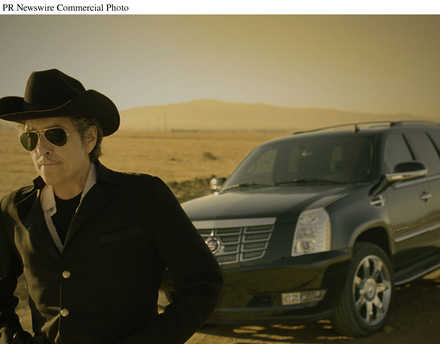 Bob Dylan has added Cadillac to his short list of product endorsements.
 The Minnesota-bred folk/rock icon is featured in a television ad for the 2008 Escalade. The ad starts airing today.
The ad features Dylan behind the wheel of a Cadillac driving across a remote desert listening to the XM satellite radio network.
Dylan has one line in the commercial: "What's life without taking a few detours?"
Print and online versions of the ad begin running in November. Dylan has previously done ads for Victoria's Secret and iPod.
Dylan Quote
" Everybody plays in my world
aint nobody first second third or fourth
everybody shoots at the same time
an ringers dont count"
A letter from Bob Dylan
Columbia, Maryland September 28, 2007
| 1. | Rainy Day Women #12 & 35 (Bob on electric guitar, Donnie on lap steel) |
| 2. | Señor (Tales Of Yankee Power) (Bob on electric guitar, Donnie on lap steel, Stu on acoustic guitar) |
| 3. | Just Like Tom Thumb's Blues (Bob on electric guitar, Donnie on lap steel) |
| 4. | Simple Twist Of Fate (Bob on electric keyboard and harp, Donnie on pedal steel, Stu on acoustic guitar) |
| 5. | Rollin' And Tumblin' (Bob on electric keyboard, Donnie on electric mandolin, Denny on slide guitar, Stu on acoustic guitar) |
| 6. | Workingman's Blues #2 (Bob on electric keyboard, Donnie on pedal steel, Stu on acoustic guitar) |
| 7. | Desolation Row (Bob on electric keyboard, Donnie on electric mandolin, Stu on acoutic guitar, Tony on standup bass) |
| 8. | Beyond The Horizon (Bob on electric keyboard and harp, Donnie on pedal steel, Stu on acoustic guitar, Tony on standup bass) |
| 9. | Honest With Me (Bob on electric keyboard, Donnie on lap steel) |
| 10. | When The Deal Goes Down (Bob on electric keyboard and harp, Donnie on pedal steel, Stu on acoustic guitar, Tony on standup bass) |
| 11. | Highway 61 Revisited (Bob on electric keyboard, Donnie on lap steel) |
| 12. | Ain't Talkin' (Bob on electric keyboard, Donnie on viola, Stu on acoustic guitar) |
| 13. | Summer Days (Bob on electric keyboard, Donnie on pedal steel, Tony on standup bass) |
| 14. | Masters Of War (Bob on electric keyboard, Donnie on lap steel, Stu on acoustic guitar, Tony on standup bass) |
| (encore) | |
| 15. | Thunder On The Mountain (Bob on electric keyboard, Donnie on lap steel, Stu on acoustic guitar) |
| 16. | Blowin' In The Wind (Bob on electric keyboard and harp, Donnie on violin) |
Bob Dylan Yom Kippur siting, 2007
An email I received today:
Since you have a web page on the subject, here’s a sighting if you’re interested -
Bob Dylan on Yom Kippur/Shabbat 5768 (Sep. 22 2007) in Atlanta, GA -
He had a show that night at an arena just outside of town and ours was the Chabad shul most convenient to his hotel.
He had the 5th Aliyah (he had asked for one) and left after Yizkor.
His Rabbi in California called my Rabbi the day before to make arrangements and was very specific. He said, and I quote verbatim what I was told by one who was present during the call, that “he hates people” and wanted to be left utterly alone. He didn't want anyone coming up to him and saying anything... not "Welcome," not "Shabbat Shalom," nothing. Not even the Rabbi was to come up and say hello. He wanted 3 reserved seats out of the way in the back for himself, his road manager and personal manager (though some say one was a bodyguard).
But he asked for the Aliyah nonetheless and wore a large black knit ski/pimp hat instead of a kippah. There was no way the cat didn't stand out in the crowd. When he had his Aliyah you could hear a pin drop, but he muttered so softly that only the guys on the bima could hear him.
Some details that only a Jewish Dylan fan would appreciate:
• He was seated in the midst of Israelis, none of whom had a clue who he was.
• Dylan’s Hebrew name as he gave it on the bima is Zushia ben Avraham, not Shabtai Zisel. Why the difference, I don’t know... either the latter has been wrong all these years or he changed it, but what he said was absolutely clear to everyone who heard him.
• When a Mi Sheberach was made after his Aliyah, he gave the names of four kids. The Gabai asked, “Any other children?” He said, “I have a lot of kids, just go ahead.”
• His Aliyah pledge was for “Tzedakah,” meaning amount to be determined. The Rabbi is still wondering if it was all worth it or not.
I told my Rabbi, “If he ever comes on a different Shabbat or Yom Tov and you invite him for a meal without inviting me as well, you and I are through.” He laughed and said, “I’m told he only comes to shul on Yom Kippur, so don’t hold your breath.”
Hanging out with Bob in 1965
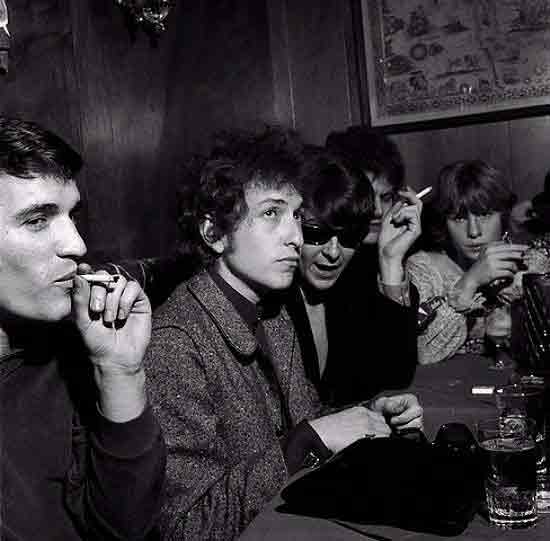 Jerry Schatzberg’s shot of Bob Dylan in a New York studio - unusual in that the singer is unguarded, and not posing for the camera - was taken in June 1965, during the recording of the Highway 61 Revisited album. Schatzberg was making his name as a fashion and portrait photographer when he got a call from Dylan’s then-girlfriend Sara Lowndes to say that if he wanted to take shots of the rising star and his newly acquired electric backing band, he was welcome. “Sara was a friend, and she and Nico [who later sang with the Velvet Underground] had been telling me about Dylan for a while,” remembers Schatzberg. “They took me down to see him play in the Village. After that, I was very keen to take his picture.”
Schatzberg got to see a side of Dylan that was distinct from the one emerging in the public consciousness: he was playful, co-operative, and excited by the music he was making. “It was an ideal situation because he was absorbed by his work and he let me get on with mine. He was fun and willing to do anything, but he came across badly in the press at the time because the reporters’ questions didn’t match up with what he was thinking. I remember someone asked, ‘Do you believe in nature?’ His reply was, ‘I don’t believe in any drugs.’”
The shot also coincided with Dylan’s denunciation by the folk world that had supported him. His performance at the 1965 Newport folk festival, with an electric guitar and backing band, had outraged the acoustic purists, and he followed it with a tour that mostly consisted of sustained boos from the audience. “I went to see him in concert at Forest Hills in New York, where he was booed,” remembers Schatzberg. “We went to [Dylan’s manager] Albert Grossman’s apartment in Gramercy Park afterwards, and Dylan was in a rage because he was absolutely sure of what he was doing. It’s not the job of an audience to tell an artist what they can and cannot do.”
The Other Side Of The Mirror Bob at Newport DVD
| ||