Blogia

Just Call Me Angel

GUZZIOLOGY

GUZZIOLOGY


A Guide to Moto Guzzi


V-twin Motorcycles —


designed to supplement existing


service manuals and parts references


David Richardson


Self-Published by David Richardson

Seattle, USA


FIRST EDITION, VERSION 5.1

THIS VERSION FIRST AVAILABLE IN MARCH, 2001


TABLE OF CONTENTS

CHAPTER

NUMBER

ALL THAT STUFF THAT COMES BEFORE THE FIRST CHAPTER                                  1

MODEL HISTORY                                                                                                                           2

BASICS                                                                                                                                             3

ENGINE TOP END                                                                                                                          4

ENGINE BOTTOM END AND EXTERNALS                                                                             5

IGNITION SYSTEMS                                                                                                                       6

CARBURETORS, FUEL INJECTION, & air FILTERS                                                           7

EXHAUST SYSTEMS                                                                                                                     8

CLUTCH AND FLYWHEEL FOR MANUAL TRANSMISSIONS                                            9

MANUAL TRANSMISSIONS                                                                                                      10

AUTOMATIC TRANSMISSION, CLUTCH, FLYWHEEL, & A.T.F. SYSTEM                     11

DRIVESHAFTS AND U-JOINTS                                                                                                12

REAR DRIVES                                                                                                                              13

GEARING                                                                                                                                        14

CHASSIS                                                                                                                                        15

HAND & FOOT CONTROLS AND INSTRUMENTS                                                              16

ELECTRICS — OTHER THAN IGNITION AND CHARGING SYSTEMS                           17

CHARGING SYSTEMS                                                                                                                18

BRAKES                                                                                                                                         19

FRONT FORKS                                                                                                                             20

REAR SHOCK ABSORBERS                                                                                                    21

WHEELS                                                                                                                                         22

GUS’S BIKE                                                                                                                                   23

PARTS AND PERFORMANCE KITS                                                                                        24

OWNER’S HANDBOOKS, PARTS REFERENCES, AND SERVICE MANUALS            25


ALL THAT STUFF THAT COMES BEFORE THE FIRST CHAPTER


Listening to Car Talk on (US) National Public Radio, I heard a statement of profound truth. One of the brothers (Tom & Ray Maliozzi) hosting the show told a listener that her local mechanic probably learned to fix cars the old-fashioned way: by making mistakes on other people’s cars. This is probably even more prevalent in motorcycle repair, especially with Moto Guzzis, since I’ve only recently known of national service training seminars for dealers’ mechanics here in the US. Add to that the sometimes — shall we say — inspecificity of the factory manuals and it became obvious to me that there was a place for my compilation of experiences (mistakes).

This is not a repair manual in the usual sense. That need has already been attended to by the factory and others. Instead, this manual is intended to supplement repair manuals and parts references. To that goal I have provided expanded explanations, corrections, new ideas, opinions, easier methods, and updates. I’ve also tried to alert you to likely problems where repair manuals tend to list all operations without weighing them as to frequency. As well as helping owners, my hope is that this book will benefit new Guzzi dealers (and old ones) and new dealer personnel.

Besides the gaps in the service manuals, the Guzzi parts references are also incomplete to varying degrees. Much necessary information regarding correct part numbers has been lost over the years so I’ve also included as much of it as I know. I have not, however, included references to square-fin and small-twin police models, as their variations are too many, too frequently revised, and I’ve never seen the bikes over here. I have listed many of the accessory items now being distributed in the US by our importer, Moto Guzzi North America. Obviously for European owners, far more accessories are available from more logical sources than Moto America.

I have long been a self-appointed cheerleader for Moto Guzzi, missing no opportunity to point out the obvious and unrealized advantages of owning one. Yet another reason for compiling this book has been to offer what hopefully will be one more plus to owning a Moto Guzzi. I don’t know of any other motorcycle brand for which this scale of reference material exists in one volume. And that segues to another reason for writing this book: so that I could compile all the information I need in a way I can easily use. Yes, I do have a well-worn copy of this book at work and frequently use it. You don’t think I remember all this stuff, do you?

It has not been my goal to produce yet another thin, slick book that’s longer on sales appeal than in-depth content. I don’t believe that we need another book to describe the many advantages of a V50 II over a V50. There are already plenty of books like that type, designed for an evening’s entertainment. This is a reference book — intended to help you make your Moto Guzzi into what you want it to be and keep it that way.

Mind you, I don’t profess to be the authority on Guzzis. I’m just a guy who bothered to put what I believe to know in a book. I have no formal training as a mechanic. My college degree is in, of all things, human services.

So what are my qualifications? As a kid I rode dirt bikes, the last before my “age of the first driver’s license” was a Ducati RT 450. That lead to a Ducati V-twin street bike which lead to a few years as a very inept road racer. My racing days ended when I realized that I had never crashed on the street (and still haven’t, knock on wood!) but usually hit the pavement about every other weekend racing. My Ducati days ended in 1985 when I concluded that Cagiva was never going to support my 900 Desmo with a sufficient parts supply. At the time, a Guzzi was “that other Italian bike” that was usually sold at the same shops as Ducatis, due to the fact that from the mid ’60s through 1982 the two brands were imported to the US through the same firm.

From ’85 through the present I have owned a Guzzi and have earned my living working at a Moto Guzzi dealership almost continually since 1983, most of that time until recently as a mechanic. Probably my best qualifications become evident when I tell you how many of various parts my old Convert has worn (not worn out). It has had 3 sets of cylinder heads, 4 sets of cylinders, 5 sets of pistons, 3 crankshafts, 3 crankcases, 3 camshafts, 2 sumps, 4 sets of connecting rods, 2 flywheels, 3 engine breathers, 5 sets of carburetors, 2 front wheels, 4 rear wheels, 4 swingarms, 3 sets of brake calipers, 2 sets of brake rotors, 4 alternators, 3 center stands, 4 sets of rear shocks, 3 sets of fork dampers, 3 sets of fork sliders, 2 sets of fork tubes, 3 front fenders, 3 clutch levers, 3 foot master cylinders, 5 hand master cylinders, 3 sets of footrests, 4 left handlebar switch modules, 2 throttles, 2 headlights, 2 instrument panels, 3 seats, 2 gas tanks, 6 handlebars, 3 air filter arrangements, 2 tail lights, 2 sets of luggage, 3 sets of luggage mounting brackets, 4 exhaust crossovers, 2 sets of mufflers, and somehow, only 2 speedometer cables. Now this (I hope) says a lot about me and about my beliefs. First off, I believe that you learn a lot by trying things. Secondly, most of the parts on my bike are standard Guzzi—they just come from a whole lot of different models and reflect my ever growing respect for ricambi originale.

Kevin Cameron once wrote in the now defunct Cycle Magazine about aspects of “super-good ride feel.” This somewhat clumsy term fairly accurately describes my last aim in producing this volume: to help you make your Moto Guzzi the best it can be and the best suited to you.

In describing this book to others, I have often heard it said that what I have done is create yet another Moto Guzzi tips book, similar to those offered through the US Moto Guzzi National Owner’s Club. In a sense that’s true, but the differences are many. For instance, my realm of experience includes exposure to many examples of each model, so I have more opportunity to know if a particular problem is unique or common. Also, I have far more factory documents at hand for information and comparisons. On the down side, I wrote this entire book myself so the perspective is narrow. The MGNOC Tips Books are the compilations of hundreds of people writing down their ideas about just their bike(s). I think both approaches are very useful.

As this manual is intended for my fellow members of this litigious society, I need to make a statement of disclaimer, as if it will do me any good in the worst eventuality. This manual exists as a compilation of my knowledge and experience as a Moto Guzzi mechanic and owner. Any and all information in this manual is only to be used by others at their own risk. Any suggestions that would modify the engine, exhaust, or intake systems of US or other emission-controlled models are intended for off-road or racing purposes only. Street applications of these modifications are illegal, and should not be construed as their implied intent.

As this manual was produced in the United States from experience with US-model V-twin motorcycles legally imported here since 1967, some suggestions may not be applicable to other models and variants of Moto Guzzis. Since there has been some interest in this book outside the US (thank you very much!), I have been adding more and more references to non-US models.

A word on conventions: so as to ease the flow of the book, I have used several terms, borrowed or made up, to classify various models and relationships. They are:

      Left/Right                      As perceived by a normally seated rider

      Inside                             Closer to the fore/aft centerline of the frame

      Outside                          Farther from the fore/aft longitudinal centerline of the frame

      Front/Forward              Situated closer to the most forward point on the motorcycle

      Back/Rearward             Situated closer to the most rearward point on the motorcycle

      Big Twin                        Any model displacing 703 (700), 749 or 757 (750), 844 (850), 949                                                                 (1000) or 1064 cc (1100), not including the high-cam 992 (1000 cc)

      Small Twin                     Any model displacing 346 (350), 389 (400), 490 (500), 643 (650), or                                                              744 cc (750) — Ippogrifo not included until we know more about it

      Round Fin                     Any big-twin model with oval-shaped cylinder and head finning (all                                                        pre-1985 except the California II, T5, and LeMans III)

      Square Fin                     Any two-valve big-twin model that  has cylinder and head finning with                                                   angled corners (all 1983–on big twins except the 1000 SP)

      Civilian                           Models with footpegs and standard (medium height)   handlebars

      Police                             Variant of civilian model sold to the public with footboards and high                                                       handlebars — sometimes referred to as a “California”

      Loop Frame                   Any model with a generator

      Tonti Frame                   Any big-twin with an alternator except those with the spine frame or                                                        dual-sport frame. The term pays tribute to Lino Tonti, who first                                                             designed this straight-tube masterpiece with removable lower rails for                                                     the V7 Sport. It’s been the pattern for all subsequent big-twin frames                                                              through the California EV?Jackal/Bassa except spine frame and dual-                                               sport models.

      Spine Frame                  As used on the Daytonas, Sport 1100s, Centauros, & V11 Sports

      Dual-sport Frame         As used on the Quota models

      Exposed Driveshaft     As used on the Daytonas, Sport 1100s, Centauros, & V11 Sports

      Enclosed Driveshaft    All models except the Daytonas, Sport 1100s, Centauros, & V11 Sports

      Small Valve                    Any big twin with standard 41-mm intake and 37-mm exhaust valves.                                                       These engines have 29- or 30-mm carbs or rarely fuel injection.    

      Medium Valve              Any big twin with standard 44-mm intake and 37-mm exhaust     valves                                                    with either 36-mm carbs or fuel injection. Does not include the uniquely                                             configured Sport 1100s and V11 Sports.

      Big Valve                       Any big twin with standard 40-mm carbs, 47-mm intake & 40-mm                                                               exhaust valves — doesn’t include the Sport 1100s & V11 Sports.

      High Cam                       Any 992 cc big twin with a belt-driven camshaft in each cylinder head.

      1000                                Any 949 cc engine with two valves per cylinder. High-cam models are                                                     excluded because they have so many unique details, to have included                                                             them would have filled the book with lists of exclusions.

      1000 SP NT                    Late version of the 1000 SP having nearly flat (non-upswept) mufflers                                                     and non-folding footpegs

      1000 SP                          Refers both to the early and NT versions unless otherwise specified

      V50                                 Refers both to the V50 and V50 II unless otherwise specified

      LeMans II                      Refers only to this specific model and not also to the US variant, the                                                       CX 100, unless otherwise specified

      LeMans                         Refers only to the LeMans I, II, III, IV, and V and not also to the                                                               CX 100 unless specifically included (which doesn’t mean that I                                                      don’t think of the CX 100 as a true LeMans)

      California II                   Refers to just the five-speed version and not also to the California II                                                        Automatic unless specifically included or written as plural

      California III                  Refers only to carbureted version and not also to the California III i.e.                                                     unless specifically included or written as plural

      FD or Dresser               Refers to the fully-outfitted version of the California III, with a frame-                                                      mounted touring fairing, saddlebags, and a trunk

      Cruiser                           Common version of the Cal III without Dresser appointments, may or                                                      may not have a windshield and may or may not have saddlebags, but                                                           will have standard (not [low] Classic or [big] Dresser) handlebars

      Classic                           Low-bar Cal III, always without accessories (windshield & bags)

      California 1100              Refers only to carbureted version and not also to the California 1100i                                                      unless specifically included or written as plural. Chassis details also                                                         apply to the California 1000 (not the same as the California III)

      V40 Capri                       Rare model hardly covered here, mainly because I lack references for                                                       it— can be considered the same in most respects as the V35 Imola II.

      Sport 1100                     Refers only to carbureted version and not also to the Sport 1100i                                                              unless specifically included or written as plural

      Sport 1100s                   Refers only to the Sport 1100 and the Sport 1100i and not also to the                                                       V11 Sport

      Daytona                         Refers only to original version and not also to the Daytona Racing                                                          and/or RS unless specifically included or written as plural

      T5                                   Refers only to early series I, II, & III and not also to the ’94-on version

      Euro or world                Standard version (as opposed to a country-specific variant) of a model

      US                                   Variant of the Euro version for the US market

      EPA                                United States Environmental Protection Agency — refers to                                                                      modifications for compliance with US emissions standards.

      N/A                                                Not available or not applicable

      N/L                                 Not listed — in other words it never has been available

      NAS                               Not available separately — can only be had as part of an assembly

      NLA                               No longer available

      i.e. or i                            Model suffix for the fuel-injected variant of a carbureted model

      MGNOC                         Moto Guzzi National Owner’s Club (US)

      Moto America              US Moto Guzzi importer (now officially Moto Guzzi North America)

      EV                                   Refers to both the California EV and ’98—’99 US-only V11 EV

      V11 EV                           Refers to just the ’98—’99 US-only variant

      Bassa                             Refers to both the California Special and ’99—’00 US-only V11 Bassa

      Jackal                             Refers to both the California Jackal and 2000 US-only V11 Jackal

      Nikasil/Nigusil              Used interchangeably, the former refers to the modern cylinder plating                                                    developed by Mahle and used by BMW, Ducati, and several others.                                                         The latter is Guzzi’s own version.

A big problem for me in writing this book has been organization. I know my style and I know the material I’m covering — this isn’t a gripping novel destined to hold readers spellbound cover to cover. Since most readers will only be looking for small, specific pieces of information at any one time, the difficulty for me has been in making the information accessible.

That’s why all chapters begin on a right-hand page so that they’re easier to find when thumbing though the book. Within the chapters, the headings and subheadings each have their own style so you can tell which topics relate to which previous ones. What follows is what they each look like.

chapter title

Main heading within a chapter

First degree sub-heading

Second degree sub-heading

Third degree sub-heading

Fourth degree sub-heading

The master table of contents (which precedes this chapter) merely lists the number of each chapter. There is also a highly-detailed and very extensive table of contents at the beginning of each chapter. In each chapter’s table of contents, the main headings alone are in bold type with each degree of sub-heading further indented from the left margin. The pages of each chapter are numbered with the chapter number followed by a hyphen, then the page number of that chapter. For example, pages in the Brakes chapter are numbered 19-1, 19-2, 19-3, and so forth. I wanted to include continuous page numbering but the size of this work apparently exceeds some sort of structural limit in my word processing software (no matter what Microsoft said in their manual for it). What you see is the best method I could devise and, I believe that once you get used to it, actually makes it easier to navigate the book. Better yet, this setup made it possible for me to make immediate updates, requiring at most the reprinting of a single chapter.

While many sections only have meaning when a need occurs, some, I believe, contain important information for you to consider immediately. To alert you of the latter, those headings are double underlined, as are their corresponding listings in their chapter’s table of contents. This important information applies whether you have just purchased a used bike, a new one, or the same familiar mount has graced your garage for a long time.

Side column headings are used to signify when a section is only applicable to certain models or variations. Some abbreviations within the side headings aren’t specific enough, such as “Late Eldorado” or “All.” My intention is simply to draw your attention to everything that may be useful to you. Just remember that that section may only apply to a variant of your model other than your own. This same rule applies to applications listed in tables. Otherwise, some tables and side headings would have been longer than their accompanying text! The same side-heading applications are in force until a new side heading appears, even if it’s several sections later.

Of greatest importance is to tell you how I envisioned this book to be used. I tried to organize the material in such a way so that when you are about to work on something or order parts, you can first look in the appropriate section to see if this book offers anything applicable. This can be a tedious way of going about things but it’s really the only way that works.

Often I will cite Moto Guzzi part numbers for convenience. Usually they appear in parenthesis without further explanation as two groups of four digits separated by a single space (Moto Guzzi lists them as 8 digits in a row but I find that style more difficult to read, say, and remember). Some part numbers will appear in strike-through (1208 7000), meaning they are no longer available. This notation shouldn’t be trusted completely as parts suddenly become unavailable and some unavailables return. More so, what is currently unavailable in the US may be available from European sources. Stranger yet, we sometimes have the last of something over here that’s long been unavailable in Europe.

I’ve also included many references to aftermarket parts and accessories available through Moto America. I rarely included similar references to parts from other sources as they may not all be easily available to everyone and, quite frankly, I certainly don’t know everything offered by everyone. When a part number reference is to a Moto America offering it will appear something like “(MA 9999 2800)”. I realize of course that many more accessories and aftermarket parts are available in Europe. Until Moto America began importing accessories in the early ’90s, few items other than factory Guzzi parts were easily available to North Americans. It’s still spotty but generally getting better.

To European Guzzisti, please excuse our American excitement regarding the availability of items you may think of as common. I know that many of the same items we finally enjoy have long been available to you from a variety of sources. So that you do have at least one source for reference, I’ve included many part numbers from Teo Lamers Motorrijwielen in Nijmegen, Holland, as they sell both retail and wholesale throughout Europe and are conversant in most Western European languages (and they’re great people as well!). When a part number reference is to a Teo Lamers offering it will appear something like “(TL 2803 6060 5150)”.

Rarely will I refer to the US price of an item, and then usually only in general terms. Obviously, prices change and I don’t want to make your local dealer look bad because the dealer’s price is more than my possibly dated appraisal.

Some explanations are enhanced by information in additional sections. In many cases I have abbreviated references to the name of the chapter and the heading enclosed in brackets, such as {Ignition Systems: Spark plug wire}. If the reference is in the same chapter I just name the appropriate section {Spark plug wire}. If there are two references in the same chapter I separate them with an italic “and” such as {Integrated brakes on big twins and Reverting to conventional (non-integrated) brakes}. Some sections have relevance to several chapters. If it’s a small point, I’ve often repeated the information each time it’s applicable. In others I have placed the section in the Basics chapter (my miscellaneous chapter, somewhat like that drawer full of odds and ends in the kitchen) with appropriate references.

Factory updates are often cited by the frame number at which they first apply. Older models are usually five-digit numbers. US-spec bikes have an aluminum plate that after about 1978 contains the US-mandated 17-digit number. The original factory five-digit number is usually stamped into the steering head — hopefully not under the foil tag. I believe that the 17-digit format became a world standard some time in the 1990s.

I found in writing this manual that I had to assume a level of mechanical knowledge, ability, and aptitude in the reader. Otherwise, I would have had to start by describing which end of the screwdriver to hold. My assumptions are that you can find your way around a motorcycle and a toolbox and that what you seek here is specific information about Moto Guzzis. I’m sure you will be frustrated at times that some points aren’t described in sufficient detail. Some may be oversights and some may be because I don’t know either. I truly hope that these points of frustration are few.

I’ve noticed among my motorcycle friends that we have developed our own set of unrecorded rules regarding where to use American measurements and where to use metric. We tend to use metric for linear measurement except for exacting measurements such as bearings and journals and inches again for larger measurements over a few centimeters. I have no justification for this but I did want you to know that this practice spilled over into this book.

Sometimes you will notice that I refer to “parts references” when you might expect “parts book”. My intention is to let you know that in these instances, both a book and a microfiche may exist.

Looking back, I see that there is much less information in this book specific to small twins than for the big bikes. There is nothing intentional in this as I really like the small bikes. As stated before, this book is merely a compilation of what I think I know about Guzzis. As an excuse I offer that there are fewer small twins on this continent, they tend to have less mileage, they are less often modified, and there is less parts swapping done or possible. All of these reasons have contributed to the disparity of information quantity. Starting with version 2.0 of this book, I have added a huge number of new references to non-US small twins although I still lack hands-on experience with these bikes.

Like Bill James’s famous baseball books, Guzziology is an outsider’s book. That is, it consists of information gathered from the outside: personal experiences, the experiences of mechanics, customers and other owners, and the perusal of the factory-published service manuals and supplements, parts references, and service bulletins. As such, some explanations and conclusions are suppositions and extrapolations while others are based on actual experience. I hope that in each case it is clear to you when I’m sharing experiences and when I’m being theoretical (guessing).

Regarding perspective: I tried to vary the writing voice between “This is what I do,” “You should do this,” and “The next step is...” in an attempt to make reading large sections less tedious.

I had a lot of input from printers and publishers regarding format, which may lead you to wonder why this book looks the way it does. My goal has always been to include everything I know rather than leaving out information simply because it’s rarely used. To do otherwise would have diminished the purpose and utility of this book. I wanted to pack as much as possible into a useful format while keeping the price reasonable. This book could possibly have been a slick, “professional” publication, but would have cost more, had half the content, and probably have been bound in such a way that it couldn’t be laid flat on a workbench. I’m very proud of the way my book turned out and I hope very much that it serves you well and exceeds your expectations. I also wanted you to know that it is hand made — as it obviously appears.

The one detail of my book that I am truly apologetic about is the quality of some of the drawings. Obviously, scanning and photocopying poor drawings could only result in blurry resolution.

I have often referred to the shop I work at: Moto International. I didn’t intend this book as an advertisement (I started the book long before the shop existed) but I did want to make sure that you had at least one source for unusual offerings. I’ve tried to limit the commercial impact by referring to Moto Int. as “our shop” or “we” or other similar terms. Special parts are prefixed as “MI.”

As with anything that is believed to be known, my beliefs as recorded in this book are always changing. New information can either add a new subject to this book or confirm, improve, or replace previous beliefs. For these reasons, this book has a specific version listed on page four. Recently I’ve added the date the current version was first offered, as some have mistakenly believed that no version is more recent than the last copyright date. Because this book is produced in small batches (10 to 30 at a time) the version number is always progressing as (I hope) is the book’s content, in a way no hard-cover book can match. The downside of all these revisions is that I’m sure the continuity has been reduced and some references no longer agree. Sorry about that. I fix problems when I find them or when someone kindly points them out to me.

Already in this introduction I have “borrowed” ideas from a radio show about cars, a motorcycle magazine article, and a series of baseball books. Keeping with that plagiaristic theme, here is my version of Robert Fulghum’s now-immortal Credo from his book, All I Really Need To Know I Learned In Kindergarten. I’ve seen it recycled in various forms, usually giving credit to various pets as the altars of wisdom. As for me, I’ll claim that rather than stealing the idea, I simply share the same inspiration, having grown up just down the street from Fulghum’s church. No doubt there was something special in the air (besides the stench of the peat bog) around Chase Lake in Edmonds, Washington, USA. If nothing else, I learned a lot about bikes there, playing motorcycle tag (CRASH! You’re it!) in the surrounding woods. Anyway, here is my rendition which, if you’re not into warm and fuzzy lists, can also be thought of as the Moto Guzzi version of Alcoholic’s Anonymous’s 12-step program, appropriately containing thirteen promulgations.


Credo for Moto Guzzi Owners and Mechanics

Stock parts are always best — except occasionally when they’re not

Always fix the problem as well as the symptom

The only way to really find out if something is better is to try it yourself

Just because something makes sense doesn’t mean it’s right

Changes are as likely to be tradeoffs as improvements

Nothing is believable until you’ve made the same mistake yourself

Even if you cut it twice it will still be too short

Don’t fix it if it ain’t broke — unless you know it’s going to break anyway

A big problem is easier to find than a small one

No easier or cheaper approach is ever the best way

Wrenches are brain tools, not hand tools

Rarely does anything work out the way you want if left to chance

Maintenance is almost always easier than repairs — and costs less too

And for your friends and motorcycling acquaintances along the way who wonder why you don’t ride a motorcycle with a name beginning with an “H”, just remind them that the best is rarely the most popular.

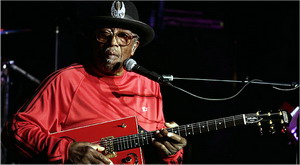
 

Bo Diddley, Who Gave Rock His Beat, Dies at 79

Bo Diddley, Who Gave Rock His Beat, Dies at 79

June 3, 2008

Bo Diddley, Who Gave Rock His Beat, Dies at 79


Bo Diddley, a singer and guitarist who invented his own name, his own guitars, his own beat and, with a handful of other musical pioneers, rock ’n’ roll itself, died Monday at his home in Archer, Fla. He was 79.

The cause was heart failure, a spokeswoman, Susan Clary, said. Mr. Diddley had a heart attack last August, only months after suffering a stroke while touring in Iowa.

In the 1950s, as a founder of rock ’n’ roll, Mr. Diddley — along with Chuck Berry, Little Richard, Jerry Lee Lewis and a few others — helped to reshape the sound of popular music worldwide, building on the templates of blues, Southern gospel, R&B and postwar black American vernacular culture.

His original style of rhythm and blues influenced generations of musicians. And his Bo Diddley syncopated beat — three strokes/rest/two strokes — became a stock rhythm of rock ’n’ roll.

It can be found in Buddy Holly’s “Not Fade Away,” Johnny Otis’s “Willie and the Hand Jive,” the Who’s “Magic Bus,” Bruce Springsteen’s “She’s the One” and U2’s “Desire,” among hundreds of other songs.

Yet the rhythm was only one element of his best records. In songs like “Bo Diddley,” “Who Do You Love,” “Mona,” “Crackin’ Up,” “Say, Man,” “Ride On Josephine” and “Road Runner,” his booming voice was loaded up with echo and his guitar work came with distortion and a novel bubbling tremolo. The songs were knowing, wisecracking and full of slang, mother wit and sexual cockiness. They were both playful and radical.

So were his live performances: trancelike ruckuses instigated by a large man with a strange-looking guitar. It was square and he designed it himself, long before custom guitar shapes became commonplace in rock.

Mr. Diddley was a wild performer: jumping, lurching, balancing on his toes and shaking his knees as he wrestled with his instrument, sometimes playing it above his head. Elvis Presley, it has long been supposed, borrowed from Mr. Diddley’s stage moves; Jimi Hendrix, too.

Still, for all his fame, Mr. Diddley felt that his standing as a father of rock ’n’ roll was never properly acknowledged. It frustrated him that he could never earn royalties from the songs of others who had borrowed his beat.

“I opened the door for a lot of people, and they just ran through and left me holding the knob,” he told The New York Times in 2003.

He was a hero to those who had learned from him, including the Rolling Stones and the Beatles. A generation later, he became a model of originality to punk or post-punk bands like the Clash and the Fall.

In 1979 Joe Strummer and Paul Simonon of the Clash asked that Mr. Diddley open for them on the band’s first American tour. “I can’t look at him without my mouth falling open,” Mr. Strummer, star-struck, said during the tour.

For his part Mr. Diddley had no misgivings about facing a skeptical audience. “You cannot say what people are gonna like or not gonna like,” he explained later to the biographer George R. White. “You have to stick it out there and find out! If they taste it, and they like the way it tastes, you can bet they’ll eat some of it!”

Mr. Diddley was born Otha Ellas Bates in McComb, Miss., a small city about 15 miles from the Louisiana border. He was reared primarily by Gussie McDaniel, the first cousin of his mother, Esther Wilson. After the death of her husband, Ms. McDaniel, who had three children of her own, took the family to Chicago, where young Otha’s name was changed to Ellas B. McDaniel. Gussie McDaniel became his legal guardian and sent him to school.

He was 6 when the family resettled on Chicago’s South Side. He described his youth as one of school, church, trouble with street toughs and playing the violin for both band and orchestra, under the tutelage of O. W. Frederick, a prominent music teacher at the Ebenezer Baptist Church, where Gussie McDaniel taught Sunday school. Ellas studied classical violin from 7 to 15 and started on guitar at 12, when a family member gave him an acoustic model.

He then enrolled at Foster Vocational School, where he built a guitar as well as a violin and an upright bass. But he dropped out before graduating. Instead, with guitar in hand, he began performing in a duo with his friend Roosevelt Jackson, who played the washtub bass. The group became a trio when they added another guitarist, Jody Williams, then a quartet when they added a harmonica player, Billy Boy Arnold.

The band, first called the Hipsters and then the Langley Avenue Jive Cats, started playing at the Maxwell Street open-air market. They were sometimes joined by another friend, Samuel Daniel, known as Sandman because of the shuffling rhythms he made with his feet on a wooden board sprinkled with sand.

Mr. Diddley could not make a living playing with the Jive Cats in the early days, so he found jobs where he could: at a grocery store, a picture-frame factory, a blacktop company. He worked as an elevator operator and a meat packer. He also started boxing, hoping to turn professional.

In 1954 Mr. Diddley made a demonstration recording with his band, which now included Jerome Green on maracas. Phil and Leonard Chess of Chess Records liked the demo, especially Mr. Diddley’s tremolo on the guitar, a sound that seemed to slosh around like water. They saw it as a promising novelty and encouraged the group to return.

By Billy Boy Arnold’s account, the next day, as the band and the men who were soon to be their producers were setting up for a rehearsal, they were idly casting about for a stage name for Ellas McDaniel when Mr. Arnold thought of Bo Diddley. The name described a “bow-legged guy, a comical-looking guy,” Mr. Arnold said, as quoted by Mr. White in his 1995 biography, “Bo Diddley: Living Legend.”

That may be all there is to tell about the name, except for the fact that a certain one-string guitar — native to the Mississippi Delta, often homemade, in which a length of wire is stretched between two nails in a board — is called a diddley bow. By his account, however, Mr. Diddley had never played one.

In any case, Otha Ellas McDaniel had a new name and the title of a new song, whose lyrics began, “Bo Diddley bought his babe a diamond ring.” “Bo Diddley” became the A side of his first single, in 1955, on the Checker label, a subsidiary of Chess. It reached No. 2 on the Billboard singles chart.

Mr. Diddley said he had first heard the “Bo Diddley beat” — three-stroke/rest/two-stroke, or bomp-ba-domp-ba-domp, ba-domp-domp — in a church in Chicago. But variations of it were in the air. The children’s game hambone used a similar rhythm, and so did the ditty that goes “shave and a haircut, two bits.”

The beat is also related to the Afro-Cuban clave, which had been popularized at the time by the New Orleans mambo carnival song “Jock-A-Mo,” recorded by Sugar Boy Crawford in 1953.

Whatever the source, Mr. Diddley felt the beat’s power. In early songs like “Bo Diddley” and “Pretty Thing,” he arranged the rhythm for tom-toms, guitar, maracas and voice, with no cymbals and no bass. (Also arranged in his signature rhythm was the eerie “Mona,” a song of praise he wrote for a 45-year-old exotic dancer who worked at the Flame Show Bar in Detroit; this song became the template for Buddy Holly’s “Not Fade Away.”)

Appearing on “The Ed Sullivan Show” in 1955, Mr. Diddley was asked to play “Sixteen Tons,” the song popularized by Tennessee Ernie Ford. Without telling Mr. Sullivan, he played “Bo Diddley” instead. Afterward, in an off-camera confrontation, Mr. Sullivan told him that he would never work in television again. Mr. Diddley did not play again on a network show for 10 years.

For decades Mr. Diddley was bitter about his relationship with the Chess family, whom he accused of withholding money owed to him. In her book “Spinning Blues Into Gold,” Nadine Cohodas quoted Marshall Chess, Leonard’s son, as saying, “What’s missing from Bo’s version of events is all the gimmes.” Mr. Diddley would borrow so heavily against projected royalties, Mr. Chess said, that not much was left over in the final accounting.

Mr. Diddley’s watery tremolo effect, from 1955 onward, came from one of the first effects boxes to be manufactured for guitars: the DeArmond Model 60 Tremolo Control. But Mr. Diddley contended that he had already built something similar himself, with automobile parts and an alarm-clock spring.

His first trademark guitar was also handmade: he took the neck and the circuitry off a Gretsch guitar and connected it to a square body he had built. In 1958 he asked Gretsch to make him a better one to the same specifications. Gretsch made it as a limited-edition guitar called “Big B.”

On songs like “Who Do You Love,” his guitar style — bright chicken-scratch rhythm patterns on a few strings at a time — was an extension of his early violin playing, he said.

“My technique comes from bowing the violin, that fast wrist action,” he told Mr. White, explaining that his fingers were too big to move around easily. Rather than fingering the fretboard, Mr. Diddley said, he tuned the guitar to an open E and moved a single finger up and down to create chords.

As his fame rose, his personal life grew complicated. His first marriage, at 18, to Louise Woolingham, lasted less than a year. His second marriage, in 1949, to Ethel Smith, unraveled in the late 1950s. He then moved from Chicago to Washington, settling in the Mount Pleasant district, where he built a studio in his home.

Separated from his wife, he was performing in Birmingham, Ala., when, backstage, he met a young door-to-door magazine saleswoman named Kay Reynolds, a fan, who was 15 and white. They moved in together in short order and were soon married, in spite of Southern taboos against intermarriage.

During the late 1950s Mr. Diddley’s band featured a female guitarist, Peggy Jones (stage-named Lady Bo), at a time when there were scarcely any women in rock. She was replaced by Norma-Jean Wofford, whom Mr. Diddley called the Duchess. He pretended she was his sister, he said, to be in a better position to protect her on the road.

The early 1960s were low times. Chess, searching for a hit, had Mr. Diddley make albums to capitalize on the twist dance craze, as Chubby Checker had done, and on the surf music of the Beach Boys. But soon a foreign market for his earlier music began to grow, thanks in large part to the Rolling Stones, a newly popular band that was regularly playing several of his songs in its concerts. It paved the way for Mr. Diddley’s successful tour of Britain in the fall of 1963, performing with the Everly Brothers, Little Richard and the Rolling Stones, the opening act.

But Mr. Diddley was not willing to move to Europe, and in America the picture worsened: the Beatles, the Stones, Bob Dylan and the Byrds quickly made him sound quaint. When work all but dried up, Mr. Diddley moved to New Mexico in the early 1970s and became a deputy sheriff in the town of Los Lunas. With his sound updated to resemble hard rock and soul, he continued to make albums for Chess until his contract expired in 1974.

His recording career never picked up after that, despite flirtations with synthesizers, religious rock and hip-hop. But he continued apace as a performer and public figure, popping up in places both obvious, like rock ’n’ roll nostalgia revues, and not so obvious: a Nike advertisement, the film “Trading Places” with Eddie Murphy, the 1979 tour with the Clash, and inaugural balls for two presidents, George H. W. Bush and Bill Clinton.

His last recording was the 1996 album “A Man Amongst Men” (Code Blue/Atlantic), which was nominated for a Grammy. He was inducted into the Rock and Roll Hall of Fame in 1987 and in 1998 was inducted into the National Academy of Recording Arts and Sciences Hall of Fame as a musician of lasting historical importance.

Since the early 1980s Mr. Diddley had lived in Archer, Fla., near Gainesville, where he owned 76 acres and a recording studio. His passions were fishing and old cars, including a 1969 purple Cadillac hearse.

The last of Mr. Diddley’s marriages was to Sylvia Paiz, in 1992; his spokeswoman, Ms. Clary, said they were no longer married. His survivors include his children, Evelyn Kelly, Ellas A. McDaniel, Tammi D. McDaniel and Terri Lynn McDaniel; a brother, the Rev. Kenneth Haynes; and 15 grandchildren, 15 great-grandchildren and three great-great-grandchildren.

Mr. Diddley attributed his longevity to abstinence from drugs and drinking, but in recent years he had suffered from diabetes. After a concert in Council Bluffs, Iowa, on May 13, 2007, he had a stroke and was taken to Creighton University Medical Center in Omaha. On Aug. 28 he suffered a heart attack in Gainesville and was hospitalized.

Mr. Diddley always believed that he and Chuck Berry had started rock ’n’ roll, and the fact that he couldn’t financially reap all that he had sowed made him a deeply suspicious man.

“I tell musicians, ‘Don’t trust nobody but your mama,’ ” he said in an interview with Rolling Stone magazine in 2005. “And even then, look at her real good.”


Helsinki, Finland June 1, 2008

1.Leopard-Skin Pill-Box Hat (Bob on keyboard)
2.Lay, Lady, Lay (Bob on keyboard)
3.Rollin' And Tumblin' (Bob on keyboard)
4.Visions Of Johanna (Bob on keyboard)
5.Things Have Changed (Bob on keyboard)
6.The Levee's Gonna Break (Bob on keyboard)
7.Tangled Up In Blue (Bob on keyboard)
8.Watching The River Flow (Bob on keyboard)
9.Every Grain Of Sand (Bob on keyboard)
10.It's Alright, Ma (I'm Only Bleeding) (Bob on keyboard)
11.Nettie Moore (Bob on keyboard)
12.Highway 61 Revisited (Bob on keyboard)
13. Spirit On The Water (Bob on keyboard)
14.Summer Days (Bob on keyboard)
15.Ballad Of A Thin Man (Bob on keyboard)
  
 (encore)
16. Thunder On The Mountain (Bob on keyboard)
17. Like A Rolling Stone (Bob on keyboard)
  

St. John's, Newfoundland May 24 2008

1.Watching The River Flow (Bob on keyboard and harp)
2.Lay, Lady, Lay (Bob on keyboard)
3.The Levee's Gonna Break (Bob on keyboard, Donnie on electric mandolin)
4.Shelter From The Storm (Bob on keyboard and harp)
5.Rollin' And Tumblin' (Bob on keyboard)
6.Visions Of Johanna (Bob on keyboard, Donnie on electric mandolin)
7.Stuck Inside Of Mobile With The Memphis Blues Again
(Bob on keyboard and harp)
8.Ballad Of Hollis Brown
(Bob on keyboard, Donnie on banjo, Denny and Stu on acoustic guitars, Tony on standup bass)
9.Highway 61 Revisited (Bob on keyboard)
10.Workingman's Blues #2 (Bob on keyboard)
11.It's Alright, Ma (I'm Only Bleeding) (Bob on keyboard, Donnie on banjo)
12.Spirit On The Water (Bob on keyboard and harp)
13. High Water (For Charlie Patton) (Bob on keyboard, Donnie on banjo)
14.Summer Days (Bob on keyboard)
15.Masters Of War (Bob on keyboard)
  
 (encore)
16. Thunder On The Mountain (Bob on keyboard)
17. Blowin' In The Wind (Bob on keyboard and harp, Donnie on violin)
  

el "castillo de los españoles"

En Montenegro todavía enseñan el "castillo de los españoles"

"En 1538 Carlos I creyó llegado el momento de una gran cruzada contra los turcos y formó una Santa Liga con Venecia, Roma y Viena. Una poderosa armada al mando de Andrea Doria acorraló en Prevesa, al suroeste de los Balcanes, a la flota de Barbarroja. Pero este eludió diestramente el bloqueo y persiguió, a su vez, a los cristianos, que no osaron hacerle frente. La única ganancia cristiana fue Castelnuovo o Herceg Novi, lugar de difícil defensa en la costa de Montenegro, junto a Cátaro (Kotor), no legos de Ragusa (Dubrovnik). Venecia reclamó la plaza, pero quedó allí una guarnición de 3.000 españoles al mando de Francisco Sarmiento, como base para futuras ofensivas. Sin embargo la Liga Santa se deshizo enseguida. Venecia pactó con Constantinopla en condiciones de inferioridad y se desinteresó de Castelnuovo, mientras Francia advertía que no toloeraría ataques a los otomanos. Castelnuovo quedó aislado por completo. En verano de 1539, Barbarroja acudió con 130 galeras y 20.000 soldados, a los que se sumaron 30.000 llegados por tierra. Ofrecieron a la guarnición una rendición honrosa y devolverlos a Italia, paro los sitiados prefirieron resistir y contestaron estoicamente a los turcos que "viniesen cuando quisiesen". Fracasado los primeros asaltos, Barbarroja empleó a fondo su potente artillería, arrasando el fuerte. Los últimos 600 defensores cayeron luchando espalda contra espalda. Solo 200 fueron hechos prisioneros, 25 de los cuales lograron fugarse de Constantinopla seis años después, capturando para ello una galeota, con la cual llegaron a Mesina. La gesta de Castelnuovo, cuyo recuerdo ha rescatado el historiador Fernández Álvarez, conmovió a toda Europa e hizo ver a muchos descontentos italianos cómo su defensa dependía de España y podían confiar en ella. Inspiró algunos sonetos de Gutierre de Cetina y del italiano Luigi Tansillo a los huesos de los soldados blanqueando entre las ruinas".

(De Bravuconadas de los españoles)


Reykjavik, Iceland May 26 2008

1.Stuck Inside Of Mobile With The Memphis Blues Again
(Bob on keyboard and harp)
2.Don't Think Twice, It's All Right (Bob on keyboard and harp)
3.The Levee's Gonna Break (Bob on keyboard, Donnie on electric mandollin)
4.Tryin' To Get To Heaven (Bob on keyboard)
5.Rollin' And Tumblin' (Bob on keyboard)
6.Nettie Moore (Bob on keyboard)
7.I'll Be Your Baby Tonight (Bob on keyboard)
8.Honest With Me (Bob on keyboard)
9.Workingman's Blues #2 (Bob on keyboard)
10.Highway 61 Revisited (Bob on keyboard)
11.Spirit On The Water (Bob on keyboard)
12.It's Alright, Ma (I'm Only Bleeding) (Bob on keyboard, Donnie on banjo)
13. When The Deal Goes Down (Bob on keyboard)
14.Summer Days (Bob on keyboard)
15.Ballad Of A Thin Man (Bob on keyboard and harp)
  
 (encore)
16. Thunder On The Mountain (Bob on keyboard)
17. Blowin' In The Wind (Bob on keyboard, Donnie on violin)
  

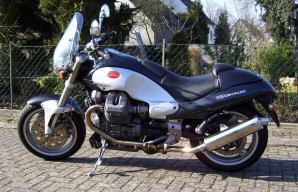
V 10 CENTAURO

V 10 CENTAURO

Special features and tips about the Centauro

Here are some reports about knowledge and infos what to do and what can be done

better:

Groundline: It is absolutly necessary to connect the regulators housing to battery

minus via a 4 mm² line. It MUST be installed. This "always" missing

cable is the reason for voltage peaks destroying the ecu. Without this

cable the total amount of current has to go through the stearing

bearing.

Valve clearance: The new and only correct valve clearance is 0.15/ 0.20mm (in/out).

This is 0.05mm more than described in your handbook but absolutly

necessary for a longtime stability and 10.000km maintenance

intervalls. Without it, even the idle run is worse.

Oillevel engine: 10mm over the max sign (fully screwed in)

Engineoil: Synthetic, 10W60, 1oW50 or 20W60. Never 5W... or 0W...

Oillevel gear box: Synthetic, 0,60l. Forget about the level indicator

Oillevel cardan: Synthetic, 0,20l. Forget about the level indicator

If oil is comming out of the front of the cardan box you may change

the shaft seal. There is place for TWO!

If the oil is comming out on other places, make a little whole in the

filling screw, connect it with a plastic tube as high as possible. I have

this tube going towards the gearbox and back under the seat ending

near the ecu.

The fork has to be stick through by 10mm (see in the workshop manual, free available in

the www).

Never use sintermetal break pads.

Fuelfilter: Mahle KL14, Art. 07637655 or MANN WK 613

Oilfilter: MANN W712/52

Brake caliper: Change the standard 8.8 screws, connecting the two halfs of each

front brake caliper by 12.9 Inbus (M8x40mm, cylinder head screw).

Use 40 Nm! The brake power will be linear instead of degressive!

Fuelpreasure: Connect the fuel preasure gauge with one or both intakes. It will

increase the drivability during changes of load (see my description of

EPROMs).

Cam belt: Contitech Syncroforce CXP STD 640-S8M-20 with 80 teath.

Any questions:

Karsten Steinke

Karsten@Steinke.org

Tel.: +49-2922-85266

V10 CENTAURO

Hello, My name is Ed. My wife and I live on the California coast, dead center in the middle of Monterey Bay. I bought the Centauro as the latest in a 40 year quest for the perfect dual sport machine. To me, "dual sport" means able to cruise and to tour.
After trailering the Beast home on Friday, we took it down the
California coastline on Hwy 1, past Big Sur to Lucia and back, about 130 miles/200 kms.
In all my years on bikes, I have never experienced nor even heard of this much power on tap - it's like somebody miniaturized the motor from a semi tractor and shoehorned it in the bike. The bike was very hard to handle at lower speeds. I found I had to be in the tallest possible gear to maintain a semblance of control. Both exhilarating and terrifying - like riding a Beast

I also found the rear suspension to be overly harsh. I weigh about 165 lbs dressed out. With preload, dampening, and rebound at their lowest settings, my back was getting banged up on the bumps and still hurts as I sit to type this. Big Beast! I attribute this to the slightly cramped seating position and will be hunting for rearsets, as well as a softer shock.
Other than the above nits, the bike is an awesome, jewel-like piece of work, definitely unsuitable for mass consumption.
Any comments and/or fixes fellow Beastmasters


***

Ed...I agree with you wholeheartedly about your first impressions. I too am 165 lbs and 34+" inseam. I don't find the legs an issue, but the rear is pretty harsh even at the softest setting. The throttle is also quite "unsafe" feeling at first. Check my post on "twitchy throttle". I'm very new to the beast myself, but I'm finding more and more as I ride it I'm really settling in on things. Is it totally stock? Tell us about your bike a little if you would. Also, I found if you set the front forks equal to the dampening of the rear it balances things out more. I had to crank mine up much stiffer up front and also make them rebound a bit slower. It helped the throttle a lot to steady the front end from bouncing around. The harsh bumps are also now transferred over the whole bike, not just the rear end. It felt like riding a bucking bull before.
It is definitely a bike you grow into. It's not for the faint-hearted nor for a rookie. At least I wouldn't want to learn on this thing! As you get to know her a bit (and tame the BEAST) t is an incredible experience that sucks you in . Right now it may feel like you had your first date with Osama Bin Laden's red-headed stepsister, but that will all change...trust me


***

Yes - to all the above !!
Having regard to the suspension , are you only going to ride solo ?
If you are then a reduction in spring rate is worth consideration and not expensive. The stocker is 500lb. A friend whose wife rides a V11 (same set-up) eventually went down to something like 360 lb. She is light . You are not heavy yourself. If you will ride two-up then the stock spring you will probably have to live with. Road surface conditions do have a large part in this of course. The spring length is not an off the shelf length , (here in
England at least) at 165mm free length but if you don't mind a struggle ! you can get a 7" on .
It's important to get the static sag right here. You could go down a little but need to wind the preload up to get the ride height.
The low speed "switch-like" low speed throttle response can be cured by an aftermarket Ecu from Oz.
Enjoy the ride ....eh Centy owners !!!! heh heh.
_________________